Material & Immaterial

Notes from the literature. A side project by Josh Tong.

Read this first

They had the plateau to themselves
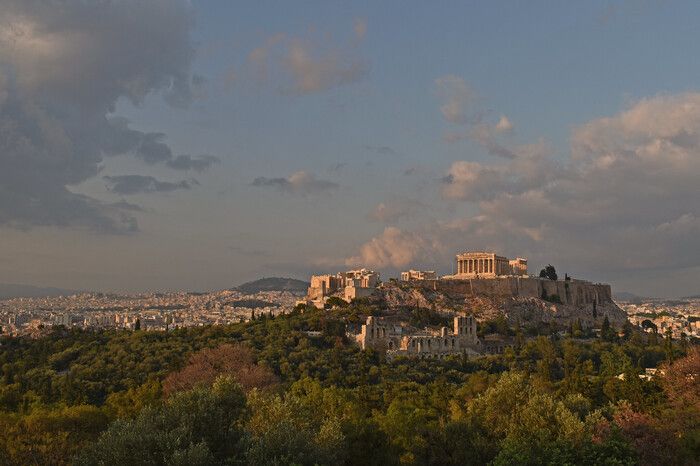
view-acropolis.jpg

Two scenes I want to remember. Athens in wartime, from Olivia Manning’s Balkan Trilogy:

Since Harriet had last climbed up, a change had come over the rocky flank of the hill. The first rains had been enough to bring the earth to life. Every patch of ground was becoming overlaid with a nap of tiny shoots, so tender that to tread on them was to destroy them.

Seen from this height the green spreading over the Areopagus seemed not a composite of yellow and blue but a primary colour, lucid and elemental.

When they turned the corner and came in sight of the sea, Harriet was struck by the immense structure of cumulus cloud rising out of the Peloponnese. The sky visible between the Plaka roofs had shown only a meaningless patching of grey and white. At this height, the cloud capes of pearl and slate and thunderous purple could be seen swelling upwards like a cosmic explosion, while to the...
Continue reading →


The end of the familiar world

campfire.jpg

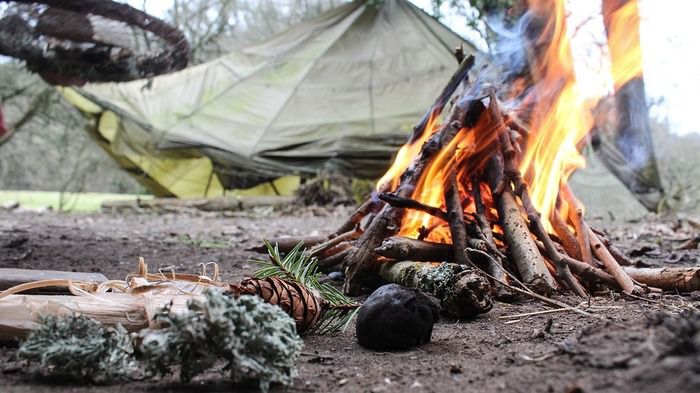
At that time in my personal life, I was coming to grips with the end of the world. The familiar world, anyway. Many of us were.

Scientists said it was ending now, philosophers said it had always been ending.

Historians said there’d been dark ages before. It all came out in the wash, because eventually, if you were patient, enlightenment arrived and then a wide array of Apple devices.

Politicians claimed everything would be fine. Adjustments were being made. Much as our human ingenuity had got us into this fine mess, so would it neatly get us out. Maybe more cars would switch to electric.

That was how we could tell it was serious. Because they were obviously lying. . . .

The parents insisted on denial as a tactic. Not science denial exactly—they were liberals. It was more a denial of reality. A few had sent us to survival camps, where the fortunate learned to tie knots...

Continue reading →


Everything was built and everything was torn down

vesuvius-686250_1280.jpg

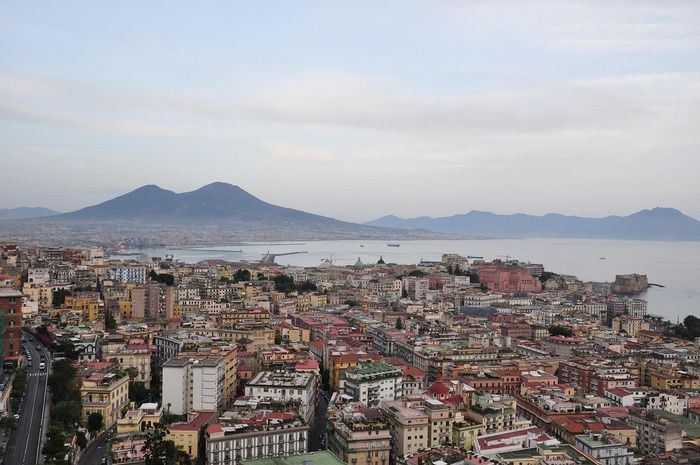
I often had the impression that Lila used the past to make Imma’s tempestuous present normal. In the Neapolitan facts as she recounted them there was always something terrible, disorderly, at the origin, which later took the form of a beautiful building, a street, a monument, only to be forgotten, to lose meaning, to decline, improve, decline, according to an ebb and flow that was by its nature unpredictable, made of waves, flat calm, downpours, cascades. The essential, in Lila’s scheme, was to ask questions. Who were the martyrs, what did the lions mean, and when had the battles and the gallows occurred, and the Road of Peace, and the Madonna, and the Victory. The stories were a lineup of the befores, the afters, the thens. Before elegant Chiaia, the neighborhood for the wealthy, there was the playa cited in the letters of Gregory, the swamps that went down to the beach and the sea...

Continue reading →


Absorbing the scale of the disaster

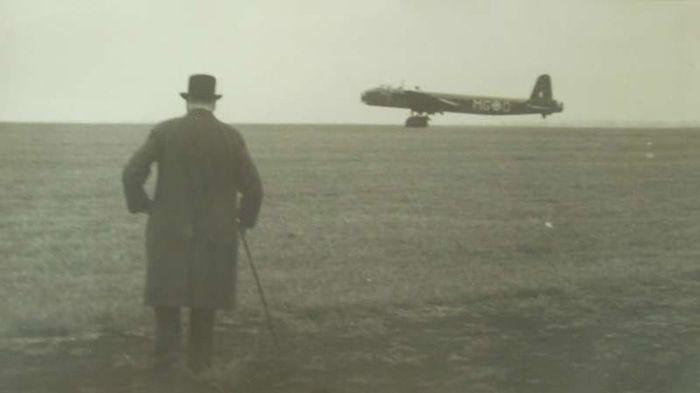
churhill-stirling-bomber-900.jpg

It was hard for many people, even the highest in the land, to absorb the scale of the disaster which had befallen Allied arms, and which now threatened to overwhelm Britain. Alan Brooke was struck by a Churchillian observation about human nature. The prime minister said that the receptive capacity of a man’s mind was like a three-inch pipe running under a culvert. “When a flood comes the water flows over the culvert whilst the pipe goes on handling its 3 inches. Similarly the human brain will register emotions up to its ‘3 inch limit’ and subsequent additional emotions flow past unregistered.” So it now seemed to Brooke himself, and to a host of others. They perceived that a catastrophe was unfolding, but their hearts could not keep pace with the signals from their brains about its significance. Harold Nicolson wrote in his diary on June 15: “My reason tells me that it will now be...

Continue reading →


It was deadly serious, but it was a game

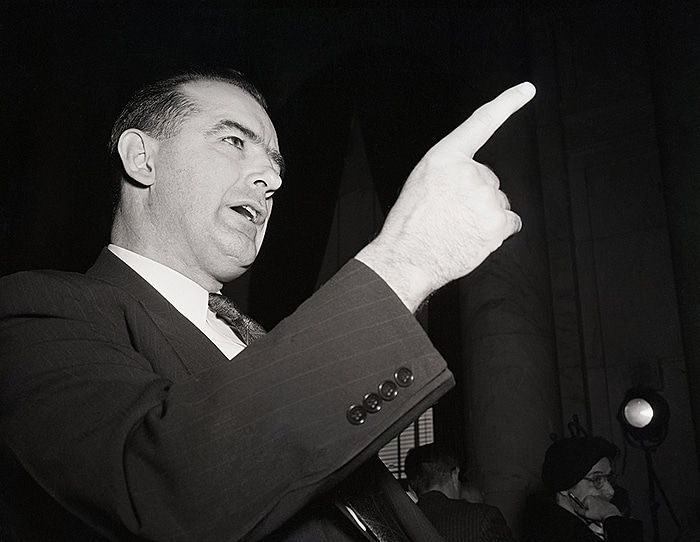
joe-mccarthy-900.jpg

From Edwin R. Bayley’s Joe McCarthy and the Press, which was published in 1981:

What is said most often is that McCarthy “used” the press, as well as the new medium of television, and of course he did. Under the conditions that prevailed, any politician clever enough and ruthless enough could maneuver the press into publishing such charges as his, especially when the accuser was a United States senator and for two years the chairman of a Senate committee. The television networks were already conditioned to be terrified of “Communist” charges, and it was a simple matter for McCarthy to bully them into giving him free time on almost any pretext. Eventually the networks developed enough confidence to stand up to McCarthy’s demands, and the newspapers developed ways of reacting to McCarthy’s accusations that guaranteed some measure of fair play for his victims, but both of these things...

Continue reading →


“Those people in Kashmir”

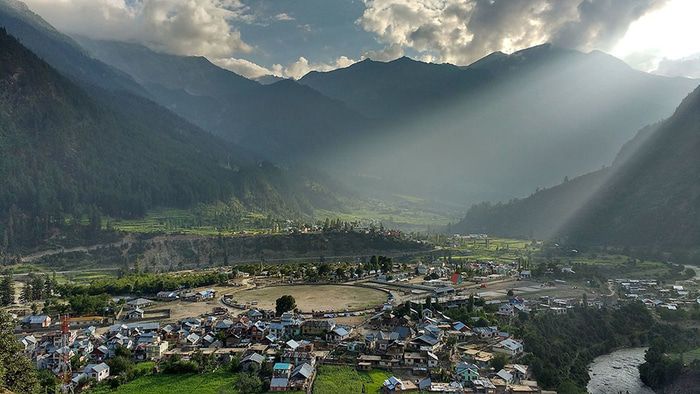
gulabgarh-paddar-900-506.jpg

In The Far Field by Madhuri Vijay, a traveling salesman finds himself explaining the fighting in Kashmir at a dinner party in Bangalore:

“Janaab,” Bashir Ahmed said quietly, “you are an intelligent man. Anyone can see that. You have a big business and a big house, and I respect you for that. And you are correct: you don’t know what I think. I have been working and traveling in this country for many years now, and I have seen a lot. But I will tell you this: you are not the only one who believes as you do. There are many others who think the same way, who think that people should be happy with whatever they get, even if it isn’t what they want. And I will also tell you this: as long as people like you believe the things you do, then those people in Kashmir, as you call them, will not go away. No, janaab. They will become more and more in number, and soon other people will join them...

Continue reading →


A language apart

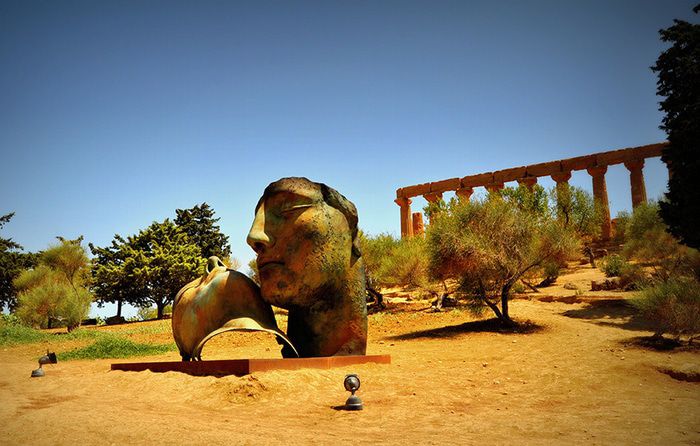
agrigento-sculpture-igor-mitoraj.jpg

History has made the Sicilian dialect almost a language apart, so great is the legacy of the Greeks, the Arabs, the French, and the Spanish. The dialect is full of marvelous metaphors, strong and vivid and with a rude vitality that has long since been ironed out of Italian. . . . My mother-in-law, for example, an insomniac of many years’ standing, would complain enviously about how easily her husband slept: “Ha il sonno attaccato col laccio—He has sleep tied on with a string,” and in my mind would appear a soft, quilted cloud, like a balloon tied on by string to the bedpost, which at a gentle tug from my father-in-law would slowly descend to envelop him in sleep. . . .

Sicilians will usually laugh at my attempts to use their dialect: they proudly claim that no one who was born off the island can properly pronounce the double d that has taken the place of the Italian double I, as in...

Continue reading →


One day you’ll know

mombasa-coast.jpg

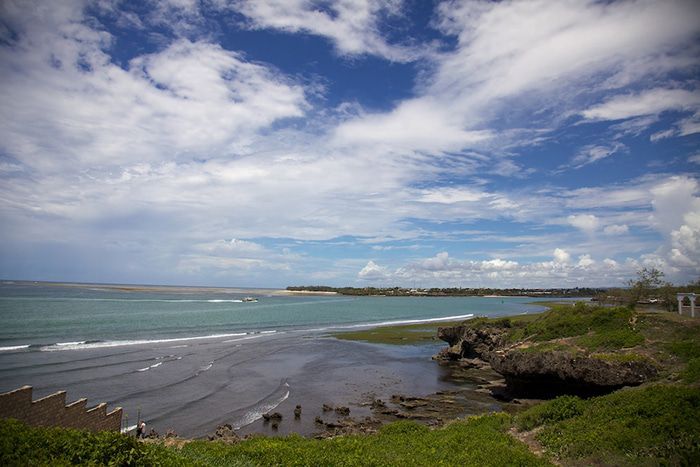
Muhidin, spurred on by Ayaana’s hunger for knowledge, prepared for their lessons in advance and rediscovered things for himself: basic classical mathematics, geography, history, poetry, astronomy, as mediated in Kiswahili, English, sailor Portuguese, Arabic, old Persian, and some Gujarati. Ayaana always wanted to know about the sea. Every day she asked, “How you read water?” One Friday, she picked up an atlas to, again, find out where she was in the world. On the map she looked at, there was no place marker for Pate Island. No color brown or color green to suggest her own existence within the sea. So she wanted to know about places that could be rendered invisible.

Muhidin told her that the best and biggest mountains of the earth lived under the sea, unseen. Ayaana contemplated this and her eyes grew round with insight. . . .

Music amplified what they could not find in books...

Continue reading →


While choosing your words

reflection-window.jpg

While choosing your words it is as if you were at a window looking out into the world. If the light that falls upon what lies beyond is very bright, you see the scene in vivid colors and there is only the faintest hint of your reflection in the glass. If the light beyond the window is faint, as at dusk, the speaker’s reflection in the glass is much more prominent. The speaker notices both his or her reflection and the scene beyond. And if it has grown dark outside, dark enough to make a mirror of the window, the speaker, or presence, sees very little other than his or her own reflection. In such a poem, presence is pronounced and superior to what is outside. . . .

Poets are usually quite consistent in the amount of light they put on the world beyond the glass, poem after poem. There are poets like Ghiselin, whose life work gives us the world outside with such vividness that we...

Continue reading →


The search for order in library science

07073-ms-chrysotom-to-type-augustine.jpg

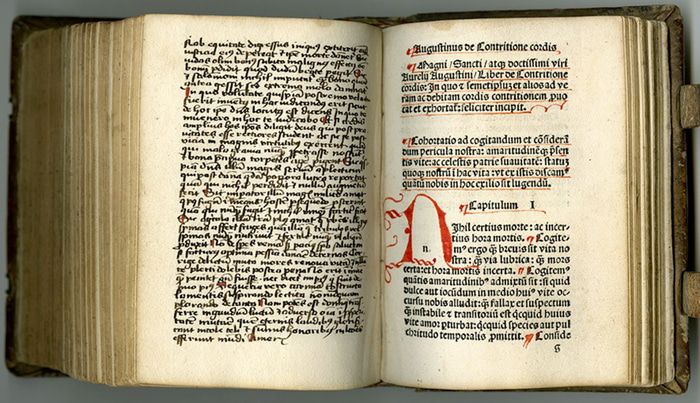
Although we are now encouraged to think of manuscripts and printed books as two distinct and separate entities, this is a cast of thinking entirely foreign to the [first century of print]. Scholars and noble collectors would mix and bind together texts they had acquired according to a highly personal order. These bound volumes might contain manuscripts that had been purchased along with items the owners had copied themselves and texts that had been copied for them. The habit of purchasing and ordering according to personal preference continued after the invention of printing: many volumes from the first century of print mix manuscripts and printed items quite indifferently. Manuscripts were not simply copied from other manuscripts, but sometimes even from early printed editions.

It was said of Frederico de Montefeltro, Duke of Urbino, that he would not allow a single printed book in...

Continue reading →