It was deadly serious, but it was a game
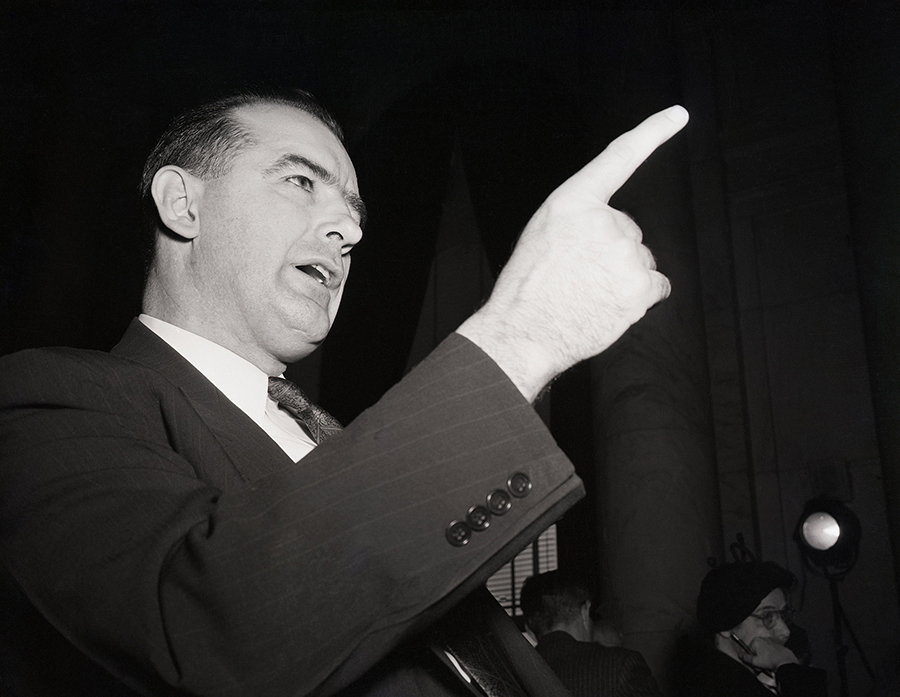
From Edwin R. Bayley’s Joe McCarthy and the Press, which was published in 1981:
What is said most often is that McCarthy “used” the press, as well as the new medium of television, and of course he did. Under the conditions that prevailed, any politician clever enough and ruthless enough could maneuver the press into publishing such charges as his, especially when the accuser was a United States senator and for two years the chairman of a Senate committee. The television networks were already conditioned to be terrified of “Communist” charges, and it was a simple matter for McCarthy to bully them into giving him free time on almost any pretext. Eventually the networks developed enough confidence to stand up to McCarthy’s demands, and the newspapers developed ways of reacting to McCarthy’s accusations that guaranteed some measure of fair play for his victims, but both of these things took time. The implication of the charge that the press “created” McCarthy is that McCarthy was not really newsworthy and that the press, by printing so much about him, gave substance to someone who was basically insignificant. . . .
No other American politician in recent history has made such a determined campaign against the press, not even Richard Nixon, whose loathing of the press is well known. Yet many of the reporters who covered McCarthy compare him favorably to Nixon. They speak of his humor, his mischievous quality, his friendliness; they share, to a degree, his cynicism. They deplore his issue, his methods, and his insensitivity to his victims, but they also see him as an adventurer, an outlaw, a lone wolf who chose disgrace rather than compromise. It was deadly serious, but it was a game for McCarthy, and he enjoyed playing it; so did the reporters. They wanted to show him up as a fraud; he just wanted his name in the papers.