Material & Immaterial

Notes from the literature. A side project by Josh Tong.

Page 3


Because my ancestors chose to run
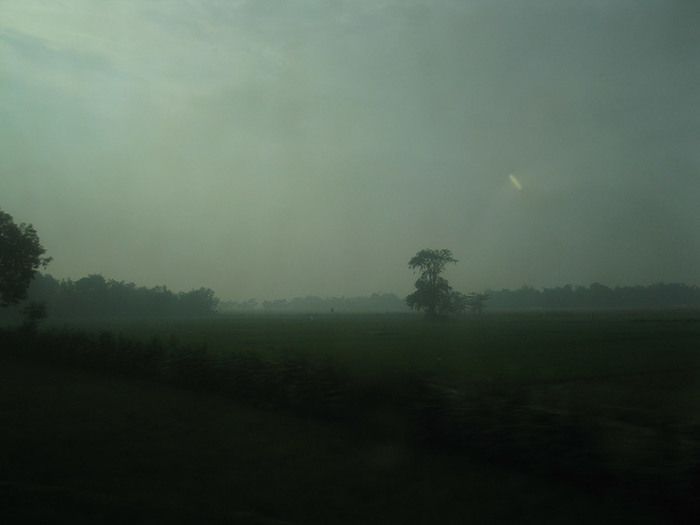
inside-night-train-near-pagerwojo-east-java.jpg

Every time I stand in my bones and feel
lost, a stranger; every time I shield my face in the dark

I know it is because my ancestors chose to run. To leave
no trace on the windowsills we passed through. Madiba,
if it were not for you…

I might have never learned to say, Fear,
I am not a lamb on your altar. This here I touch
with my body, make holy with language

all the arms of wreckage, this we who will not be moved.

—From “Poem for Prisoner 46664” in Salvage by Cynthia Dewi Oka

Photo: Taken from inside a night train near Pagerwojo, East Java, by Ikhlasul Amal, CC BY-NC 2.0
Continue reading →


A microcosm on one page

humboldt-chimborazo.jpg

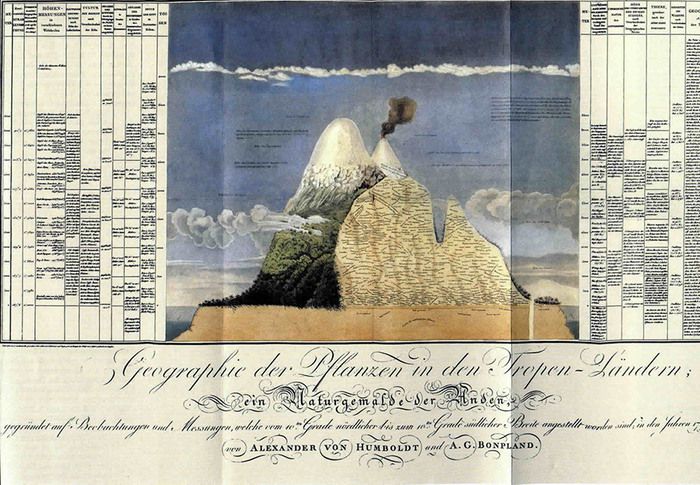
In the Andean foothills, he began to sketch his so-called Naturgemälde—an untranslatable German term than can mean a “painting of nature” but which also implies a sense of unity or wholeness. It was, as Humboldt later explained, a “microcosm on one page.” Unlike the scientists who had previously classified the natural world into tight taxonomic units along a strict hierarchy, filling endless tables with categories, Humboldt now produced a drawing. . . .

Depicting Chimborazo in cross-section, the Naturgemälde strikingly illustrated nature as a web in which everything was connected. On it, Humboldt showed plants distributed according to their altitudes, ranging from subterranean mushroom species to the lichens that grew just below the snow line. At the foot of the mountain was the tropical zone of palms and, further up, the oaks and fern-like shrubs that preferred a more temperate...

Continue reading →


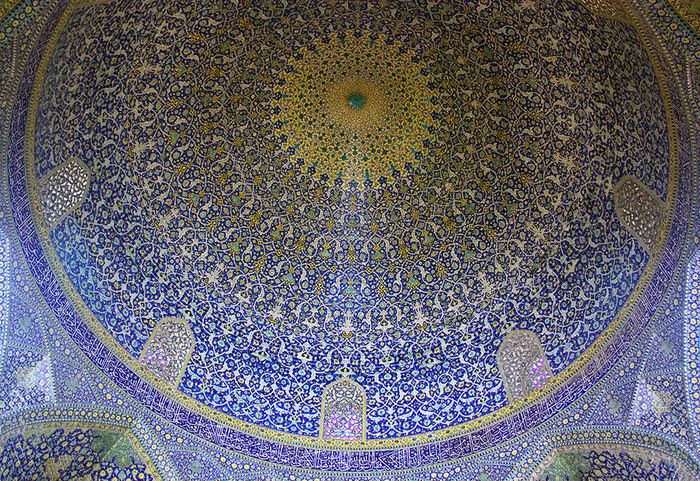
A permanent echo

masjed-e-shah-900.jpg

In Look, Solmaz Sharif builds poems out of words and phrases from the United States Department of Defense’s Dictionary of Military and Associated Terms. The terms appear in small caps, which I’m reproducing here as regular capitals.

Daily I sit
with the language
they’ve made

of our language

to NEUTRALIZE
the CAPABILITY of LOW DOLLAR VALUE ITEMS
like you.

You are what is referred to as
a “CASUALTY.” Unclear whether
from a CATALYTIC or FRONTAL ATTACK, unclear

the final time you were addressed

thou, beloved. It was for us a
CATASTROPHIC EVENT.

—From “PERSONAL EFFECTS”

Military jargon pervades the work. The jargon is by turns macho, bureaucratic, euphemistic, poetic, and inconspicuous. At times, the voices in the poems co-opt this language, but they also live and speak from inside it. It is heart-wrenching to hear them struggle against the logic and illogic of the language’s...

Continue reading →


The power of institutions

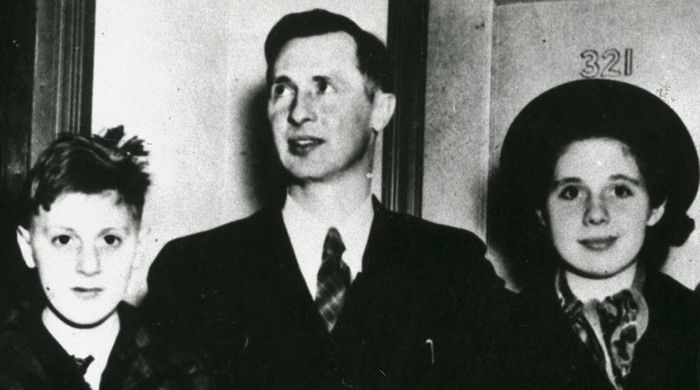
william-walter-lillian-gobitas.jpg

In Germany . . . Nazi officials banned the [Jehovah’s] Witnesses in 1933 on Hitler’s orders, for refusing to join the raised-palm salute to Nazi flags in schools and at public events. Ultimately, more than ten thousand German Witnesses were imprisoned in concentration camps. In response to this persecution, the leader of American Witnesses, Joseph Rutherford, denounced compulsory flag-salute laws.
. . .
Among the Witnesses who listened intently to Rutherford’s speech were Walter Gobitas and his family in [Pennsylvania]. . . . The two oldest Gobitas children, Lillian and William, were in seventh and fifth grades in October 1935.

—Peter Irons, A People’s History of the Supreme Court

When Lillian and William refused to salute the flag in school, the school board expelled them for insubordination. Their father took the school district to court. The Supreme Court ruled against the...

Continue reading →


From down the hall

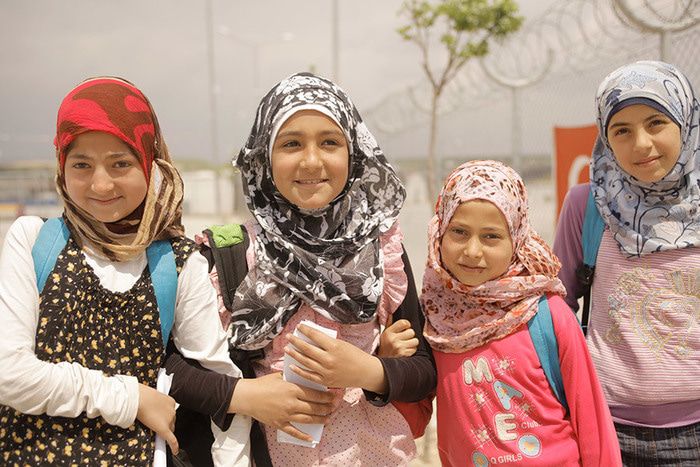
turkey-camp.jpg

Your sister in a camp in Turkey,
Sixteen, deserving of everything:
Let her be my daughter, who has
Curled her neat hands into fists,
Insisting nothing is fair and I
Have never loved her. Naomi,
Lips set in a scowl, young heart
Ransacking its cell. Let me lend
Her passion to your sister, and
Love her for her living rage, her
Need for more, and now, and all.
Let me leap from sleep if her voice
Sounds out, afraid, from down the hall.

—From “Refuge” in Wade in the Water by Tracy K. Smith

Photo: From a Syrian refugee camp in Turkey, April 2015, Ariel Rubin/UNDP, CC BY-NC-ND 2.0

Continue reading →


A curious calm

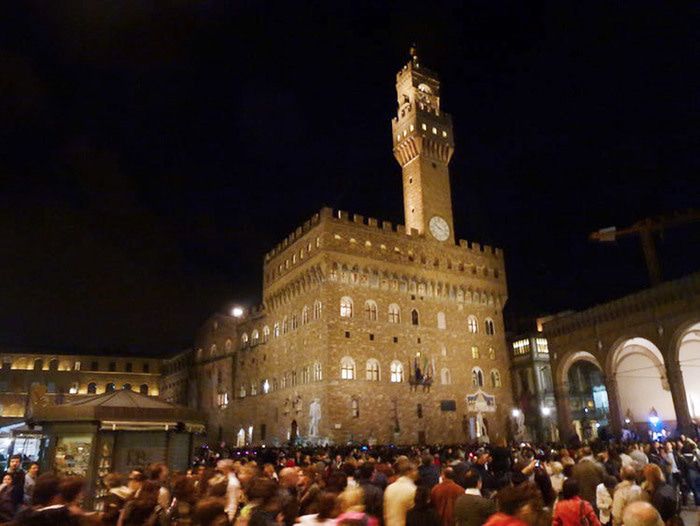
piazza-signoria-palazzo-vecchio-night-3.jpg

It is true that among educated people there is a good deal of anxiety; everyone listens four or five times a day to the radio and eagerly buys the foreign papers; most reserve officers have been called up and now six classes of recruits (about one and a half million men) and the navy and air force are fully mobilized. But in the popolino—so terrified last September and even at Easter—there is a curious calm. “Don’t worry, nothing’s going to happen!” says the hairdresser, as he sees me reading the papers. “You’ll see, the Duce will stop the war at the last moment,” says the taxi-driver. At the performance of La Traviata in Piazza della Signoria the moonlit square is packed with a gay, apparently carefree crowd. . . . “Look what Fascism has done for our people!” says a young officer as we walk home. “Compare their calm with the feverish tension in France and England!” But it isn’t...

Continue reading →


Into the public domain

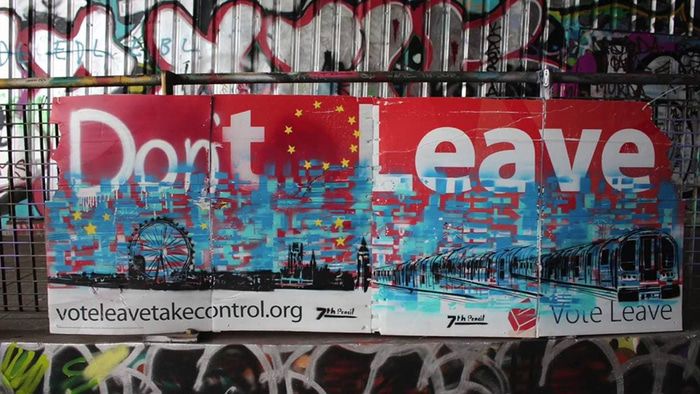
dont-leave-sign.jpg

“To be honest I shouldn’t have been behind the wheel of a car,” he said in a low voice, leaning his elbow on the armrest between us. “I could hardly see straight. I kept passing these signs by the road with the same words on them over and over again and I started to think they’d been put there for me. You know the ones I mean—they’re everywhere. It took me ages to work out what they were. I did wonder,” he said, with his abashed smile, “if I was actually going mad. I couldn’t understand who had chosen them, or why. They seemed to be addressing me personally. Obviously,” he said, “I read the news, but I’ve got a bit behind since leaving work.”

I said it was true that the question of whether to leave or remain was one we usually asked ourselves in private, to the extent that it could almost be said to constitute the innermost core of self-determination. If you were unfamiliar with the...

Continue reading →


In a substantially altered world

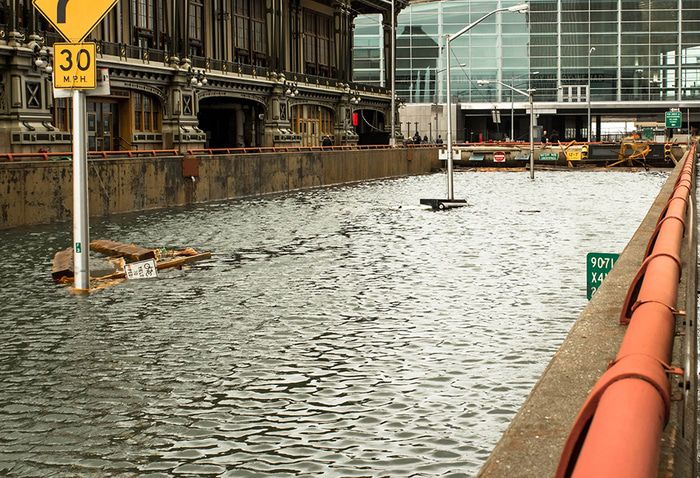
financial-district-flooding-sandy.jpg

Fiction that deals with climate change is almost by definition not of the kind that is taken seriously…. The mere mention of the subject is often enough to relegate a novel or a short story to the genre of science fiction. It is as though in the literary imagination climate change were somehow akin to extraterrestrials or interplanetary travel.

In a substantially altered world, when sea-level rise has swallowed the Sundarbans and made cities like Kolkata, New York, and Bangkok uninhabitable, when readers and museumgoers turn to the art and literature of our time, will they not look, first and most urgently, for traces and portents of the altered world of their inheritance? And when they fail to find them, what should they—what can they—do other than to conclude that ours was a time when most forms of art and literature were drawn into the modes of concealment that prevented people...

Continue reading →


The Kaiser’s darlings

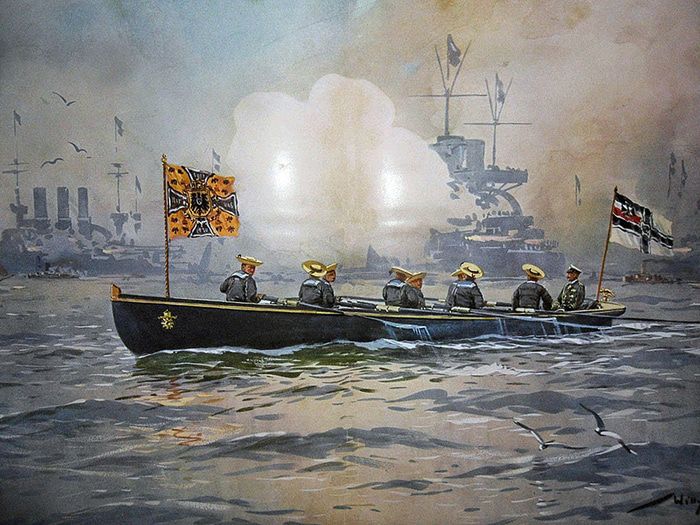
89-AAA-Kaiser-Wilhelm-II-inspecting-the-Imperial-German-High-Seas-Fleet.jpg

If the Kaiser had confined his reading to The Golden Age, Kenneth Grahame’s dreamlike story of English boyhood in a world of cold adults, which he kept on the bed-table of his yacht, it is possible there might have been no world war. He was eclectic, however, and read an American book that appeared in 1890 with the same impact in its realm as the Origin of Species or Das Kapital in theirs. In The Influence of Sea Power on History Admiral Mahan demonstrated that he who controls communications by sea controls his fate; the master of the seas is master of the situation. Instantly an immense vision opened before the impressionable Wilhelm: Germany must be a major power upon the oceans as upon land. The naval building program began, and although it could not overtake England at once, pursued with German intensity it threatened to do so eventually. It challenged the maritime supremacy upon...

Continue reading →


Those Bavarian inn conversations

tumblr_pbbhnvIOuu1u4bpk7o1_1280.jpg

This passage from Patrick Leigh Fermor’s memoir A Time of Gifts continues to haunt me, weeks after reading it.

At eighteen, Fermor traveled across Europe on foot. He walked through Germany in 1933, sometimes stopping at inns along the way:

Those Bavarian inn conversations reflected opinions which ran from the total conviction of party-members to the total opposition of their opponents and victims; with the difference that the first were loud and voluble while the second remained either silent or non-committal until they were alone with a single interlocutor. Being English was relevant to all this, for though the Germans’ attitude to England varied, it was never indifferent…. The War inevitably cropped up: they resented that we had been on the winning side, but didn’t seem to blame us—always with the proviso that Germany would never have lost if she hadn’t been stabbed in the back...

Continue reading →