The well-designed stoves of the Swiss
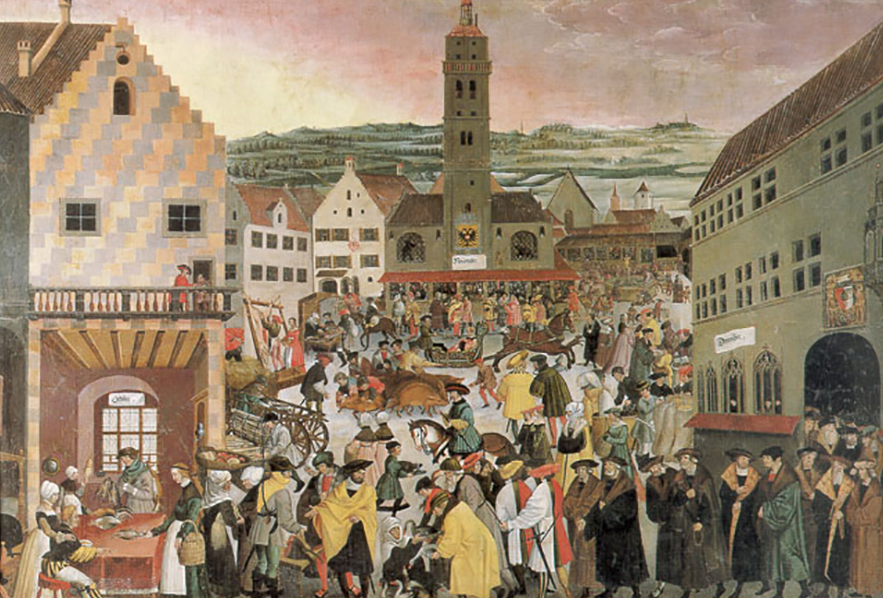
Everything engaged Montaigne’s attention, or that of his secretary, who was writing at his direction. At an inn in Lindau, a cage full of birds ran along one entire wall of the dining room, with alleyways and brass wires so that the birds could hop from one end of the room to the other. In Augsburg, they met a group taking two ostriches on leashes as presents to the duke of Saxony. Montaigne also noticed, in that city, that “they dust their glassware with a hair-duster attached to the end of a stick.” And he was intrigued by the city’s multiple remote-controlled gates, which closed off chambers in turn like locks in a canal, so that aggressors could not force their way through. . . .
Great art seemed to impress Montaigne less, or at least he says little about it, only occasionally commenting on such works as the “very beautiful and excellent statues by Michelangelo” in Florence. The Essays also contain little about visual art. He filled his tower with frescos, so must have had some taste for pictures, yet he seems to have had little desire to write about them—although the paint was barely dry on so much Renaissance art throughout Italy.
This omission was held against him by some later readers of the journal, especially the Romantics, who became its first audience, for the manuscript turned up in a trunk at the château only in 1772. Readers fell on the discovery with excitement, but emerged disappointed with what they found there. Along with a better appreciation of art, eighteenth-century readers would have liked sublime gushings about the beauty of the Alps, and melancholy meditations on the ruins of Rome. Instead, they got a record of Montaigne’s urinary blockages interspersed with closely observed, piquant, but non-sublime details about the inns, food, technology, manners, and social practices at each stop. . . . The only thing which Swiss and German readers, at least, could enjoy was the fact that the journal was also full of compliments about their lands, especially the well-designed stoves of the Swiss.
—Sarah Bakewell, How to Live, or, A Life of Montaigne in One Question and Twenty Attempts at an Answer
Painting: Heinrich Vogtherr the Younger, Perlach marketplace, circa 1550