Letting someone change things
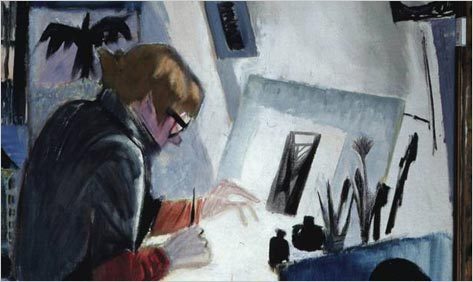
Tove Jansson’s Fair Play is a slim novel about a writer and an artist who live and work alongside each other for many years.
Jansson depicts the pair of characters in the midst of their day-to-day work and leisure. Mari (the writer) and Jonna (the visual artist) are foils whose personalities and interests complement yet also challenge each other. This tension offers an understated commentary on the spoken and the unspoken, the artistic and the quotidian, “yours” and “ours”—a dynamic that complicates but enriches the characters’ lives.
Here is an excerpt from Ali Smith’s introduction:
This novel is about creativity from the very start—about how you take a day, the same as all the other old one-after-the-other days, and make it really new and fresh, no matter what age you are, what life you’re in. It features an immediate challenge to vision—it is very much about how to shake off old ways of seeing, how to see things differently, get rid of what’s “hopelessly conventional,” and replace it with something more hopeful.
…
The book opens, then, on a simple little story about letting someone change things, which becomes a story about the editing process, or about how to make art—and is for the length of the book a parable about how to renew mundane life.